Last week we announced that Google would be holding an event to discuss the next dimension of Google Maps on June 6th, 2012. Sure enough today Google was in the spotlight as they unveiled itsenhanced 3d mapping platform that will support both iOS and Android.
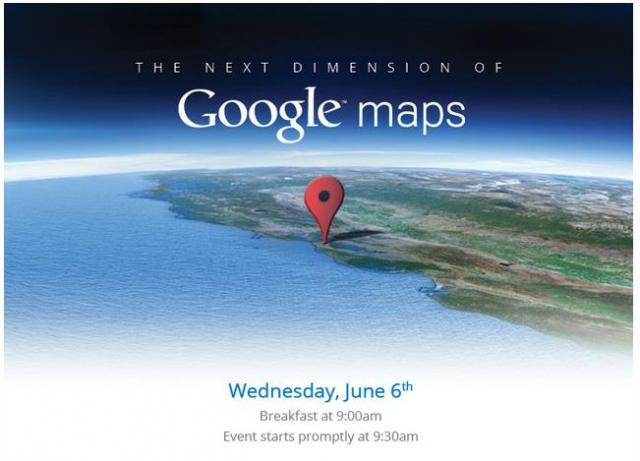
Google has mentioned that since 2006 it has had textured 3D buildings in Google earth, but in the near future they will release 3D models of entire metropolitan areas via Google Earth on mobile devices. This is thanks to new imagery rendering techniques and computer vision. With this technology Google can create 3D cityscapes, complete with buildings, terrain and even landscaping, from 45-degree aerial imagery. By the end of the year, Google aims to have 3D coverage for metropolitan areas with a combined population of 300 million people.
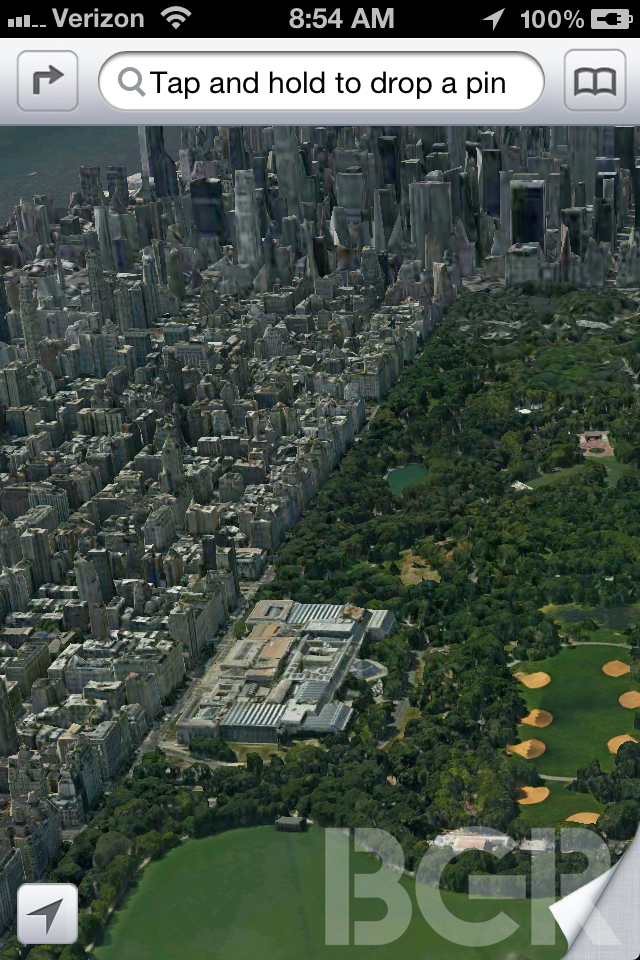
With Apple purchasing three major mapping companies Placebase, C3 Technologies, and Poly9 it is no doubt they plan to roll out their own 3D maps during the WWDC 2012. As such Apple is set to replace the Google Maps integration within iOS 6 with their own in-house maps technologies. As both Google and Apple are rolling out 3D mapping technology it will be interesting to see who comes out on top.
For those of you who are interested in watching the entire Google Maps presentation you can check out the recorded stream through the YouTube video below. If you have some time it is defiantly worth watching as what we have talked about in this article is just a brief summery of what Google covered in their presentation.
So, there you have it! Google’s new 3D mapping technology definitely looks impressive and it should only be a matter of weeks before it is in all of our pockets. We will keep you updated when more information relating to the rollout of this new mapping technology is available. Until that time please stay tuned and leave any further thoughts in the comments section below.

No comments:
Post a Comment
Note: only a member of this blog may post a comment.